'Trepidation and excitement’ while building new system
Meanwhile, a myriad of separate state planning interests maps were codified into a consolidated geographic information system (GIS) framework that used over 100 mapping layers and sub-categories.
Another key challenge was building SARA’s new online lodgement portal from scratch.
This was much more than just a simple form. The system needed to consolidate legislative triggers from 12 different state departments into a single workflow for lodgement, assessment and decision-making.
Finally, as SARA would be delivered by planners across all regional offices, local teams had to be trained on this new system, as it was still being built.
"We were creating statutory codes, policy and software at the same time as training the people who would use it, before anything was finished," Greg says."Imagine the trepidation and excitement that brings. There was a lot of considered work in change management, encouraging folks to get on board."
Approval times cut from years to months
Greg says his leadership role as Deputy Director-General of the State Development, Infrastructure and Planning Department — a title often simplified to just ‘State Planner’— was as much about people as policy.
My job was to set the vision and direction, define our operating mindset and framework, get the right people on board and make sure they had the resources they needed to work their magic," he says.
"Really, the biggest part of my job was walking around every day, going, ‘It’s going to be fine, we’ll get this done, piece of cake.’ But the truth was that at night, I'd often lie in bed thinking: “We're stuffed, we're not going to get there."
To this day, he remains awed by the team that pulled off such an enormous piece of work.
On 1 July, 2013, SARA launched — the first consolidated state planning development assessment system of its kind in Australia.
It went live as what the experts would call “a minimum viable product”: functional, but admittedly a little clunky. MyDAS, the $2.2 million online portal, would later undergo a $20 million upgrade.
But the foundation was strong, and the feedback from both industry and planners was largely positive.
Having one single point of contact within the Planning Group for all state interests made a huge difference, cutting approval times for complex projects from years to months.

A simpler system with three clear pathways
These days, development applications in Queensland follow a pathway determined by triggers in the State Planning Policy. Applications are usually lodged with the local council, where they're assessed against that policy and slotted into one of three tracks:
- Council only: The simplest applications are handled by councils alone.
- Council + SARA referral: Where a state interest is triggered — say, proximity to a transport corridor or impact on koala habitat — SARA steps in as a referral agency, providing advice while council retains the final decision.
- SARA decides: For state-significant projects such as wind farms, ports and airports, SARA becomes the decision-maker outright.
State interests covered by SARA’s now-27 state codes span everything from dams and Great Barrier Reef wetland protection to hazardous chemical facilities and solar farms.
The model helps protect councils from local community/political pressure and resource strain on complex projects while empowering them on local matters.
A free pre-lodgement service helps applicants navigate the process before formally submitting, and discounted fees are available for community and non-profit projects.
And KPIs, including approval timeframes and customer satisfaction, have been tracked and released publicly from day one, helping keep everyone involved accountable.
“Customer satisfaction was tracking pretty low, so my thought about tracking it publicly was: well, we can only do better than what it was at that time. And then — bang! — it went up,” Greg recalls.
By 2015, a massive 84% of industry professionals surveyed by the Property Council of Australia rated the state's planning system as "satisfactory or better” — a vast improvement from the 70% “poor" or "very poor” 2012 rating.
Talented planners made the difference
Greg insists none of this would have been possible without forward-thinking planners in the room.
As a qualified town planner himself, he knew his limits. "I knew a bit, but the planners who were working in and around the system had the intricate knowledge of where things had gone wrong," he says.
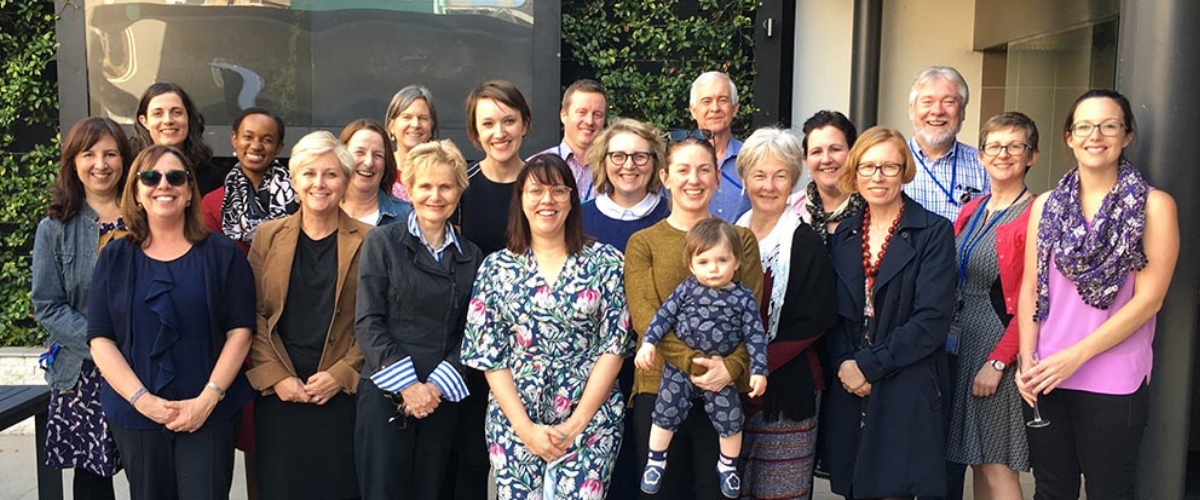
The leadership group was made up almost entirely of planners — only a tech project manager, a change manager and a communications person weren't — so everyone had on-the-ground experience.
"The group had some amazingly talented planners, really dedicated to doing the right thing by the state," Greg says. "We owe those folks an enormous debt."
It also required some planners to shift their thinking away from processes to outcomes.
"It wasn’t a matter of just following a process that inevitably led to a formulaic decision or advice," Greg says. "It's actually about a good decision for our communities: is this development proposal inherently a good outcome or not?"
The need for continuous improvement
More than a decade on, SARA has gradually accumulated new triggers and drifted back toward complexity. The current Queensland Government is reviewing the system to simplify it again.
Planning Institute of Australia Queensland President Martin Garred says that’s a chance to ensure the system remains coordinated and customer-focused, reducing duplication and improving decision-making without compromising important state interests.
"SARA remains one of the most significant planning reforms Queensland has undertaken," he says.
"The challenge for this review is identifying where policy and process can be streamlined while ensuring state interests are considered efficiently and consistently through a single assessment pathway, rather than being dealt with separately."
Greg agrees — and hopes the review returns to the philosophy his team worked by in 2013.
“‘Making it real’ was a catch-cry I invented one night to say: let’s focus on recrafting a planning system that only deals with what’s important,” he recalls.
“That became the benchmark for our process: Let’s make a planning system that’s real, so every condition we impose has real meaning and impact. If it doesn’t add to the quality of the development, it’s not real — so take it out.
“That has stood the test of time as it's the right way to deal with planning applications.”