5 March 2025
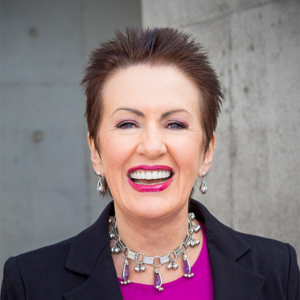

The Rt Hon the Lord Mayor of Sydney, Councillor Clover Moore AO discusses the fundamental reforms implemented during her tenure as Lord Mayor of Sydney. From a gender perspective, she provides insights into the City of Sydney’s efforts from female leadership and talent attraction to infrastructure and housing.
Looking back on your career, how do you think your experiences have shaped your advocacy for gender equality in this position?
I didn’t plan a life in politics. I did an Arts degree and received a teaching certificate from Sydney Teachers College, and began my life as an English and history teacher in Sydney, and then in the much wilder east end of London. After almost five years, I returned to Sydney with Peter and our young family, and we bought our first home in Redfern. I couldn’t believe how rundown the area was – relentless through-traffic ran down most streets, playgrounds were covered in bitumen with broken equipment surrounded by rusted chainmail fences. It wasn’t a place for families and petitions to Council and State Representatives went unanswered, probably because they just expected people to leave.
The little playground on our corner was all asphalt, it had a chain wire fence and barbed wire on top of that. In those days families moved out unless they couldn't afford to. I used to ask the council why we couldn't have some grass in the playground and I was told, “It's too hard to sweep up the broken glass.” It was a need that got me pacing local streets gathering support for better local facilities, it was a need that led me to form a community action group, and it was a need that inspired me to stand and be elected to local council. It charged me, and l loved it. While being quaintly titled ‘Alderman’, I had no power, but when others were behind closed doors doing the factional numbers, I was out on the streets getting trees planted. I had been at South Sydney Council for a year when it was forcibly amalgamated with the City Council. After six-and-a-half years, and with the growing number of progressive independents, the State Government sacked the City council.
The sacking spurred me to stand for the 1988 State election and I became the Independent State Member representing the electorate of Bligh, which was later named Sydney. In 2004, history repeated itself and the reinstated South Sydney Council and the Sydney City Council were sacked and amalgamated, again by the Labor Government, and again to try to get control of the city. I had not contemplated a return to local government, but I was outraged by this further manipulation of democracy and concerned about the future of our city. So, I gathered a team of like-minded community representatives and – after a three-week campaign – we won with a majority on the new council, and I became Lord Mayor.
For eight years I served as both a State representative and Lord Mayor, and among my many concerns and interests, I concentrated my efforts on social reform. Not only the making of a progressive City, but a progressive State. As an independent and community-based MP who, along with colleagues John Hatton and Peter McDonald held the Balance of Power between 1991 and 1995, I was involved in groundbreaking reforms which were negotiated with both major parties.
Our Charter of Reform included the introduction of four-year fixed Parliamentary terms and greater independence of the judiciary. We achieved the Royal Commission into police corruption, introduced whistleblower legislation, increased the independence of the Ombudsman and Auditor General and established a Legal Services Commissioner. These reforms were described as the most progressive in any Westminster system in the 20th century. And they are reforms that no major party will initiate without being forced to. In 1992 I was the first Lower House State MP to march in the Gay and Lesbian Mardi Gras and have participated in it most years since then. I have amazing memories, from judging the parade floats on top of an Oxford Street shop awning – which was legal then – to observing a group of Clover lookalikes in the parade dressed in business suits and big-hair wigs a year after my Anti-Discrimination (Homosexual Vilification) Bill became law making it illegal to incite hatred of gay men and lesbians.
I still love taking part in Mardi Gras – it’s a great celebration and it continues to highlight the struggle for equality. Fighting for the rights of gay men and women back then was considered radical activism. They were very difficult times. Homophobia was rife, and homophobic slurs and attacks were common. We saw friends die from AIDS-related diseases and suffer discrimination even in death when family members failed to honour their request to be buried with their partner. I also introduced the Adoption Amendment (Same Sex Couples) Bill which was passed in a nail-biting conscience vote, so children of same-sex couples could be adopted by both their parents. At the 1999 Drug Summit, I moved the motion which led to the establishment of the Medically Supervised Injecting Centre in Kings Cross, which, after an exhaustive 10-year trial was judged a success and made permanent. I was the only MP willing to have the trial of the Injecting Centre established in my electorate. I had painstakingly explained to the community how it would save lives, get users in to treatment and take injecting off the street, and, to this day it has managed more than 1.2 million supervised injections for about 18,000 registered clients, and about 10,890 overdoses have been managed without a single death. We take these reforms for granted now, but they were hard-won.
I was both a State MP and Lord Mayor for 8 years – which was lots of work, but very effective – until the Government passed a Bill making it unlawful to have both roles. It was known as the ‘Get Clover Bill’. I chose the City and have become the longest serving Lord Mayor and was the first popularly elected woman in the City’s 181-year history. I will run for my sixth term this year. I was forced to leave Parliament after serving 24 years despite having been democratically elected seven times; and despite many male members of the Labor or Coalition Parties having been Members of Parliament and Lord Mayor’s simultaneously. Was it that I was a woman, or independent and progressive? Or was it all three? During the 8-year period that I was MP and Lord Mayor, I donated my mayoral salary to a Lord Mayor’s Trust for people in need in the city – people who were mentally ill, drug and alcohol dependent, homeless, young people at risk as well as animal welfare or environmental or sustainability initiatives. Altogether I donated $1.4 million. City making at its most fundamental is a statement of values. My work as Mayor is about creating a city where, at a minimum, people have universal access to public places and transport including walkable streets and a separated bike network, to affordable homes close to work, to quality community facilities and services, a safe and clean environment, culture with a sense of belonging, and where everyone is treated with respect.
As the first female popularly elected Lord Mayor, and after many years battling patriarchal party politicians, I wanted the City of Sydney to be an organisation that attracted, supported and retained talented women. So, along with the second only woman CEO of the City of Sydney, Monica Barone, we set about making needed changes. We became the first local government organisation to monitor and publicly report on gender pay equity and we introduced new family friendly policies for women and men. For 6 years we have defied Australian trends with a pay gap in favour of women of 5.3% compared with 14.1% in favour of men across Australia. One of the reasons for this is the leadership profile of our organisation with 70% of councillors, 55% of our Executive team including our CEO, 53% of our senior managers and 50% of our section managers all females. By promoting the City as an employer of choice for women and by addressing conscious and unconscious gender bias, the City’s workforce composition has become more gender balanced. The number of women employed by the City of Sydney has grown substantially from 29 per cent in 2005 to 42.7 per cent in 2022. Also women shouldn’t be penalised by having lower superannuation benefits at retirement because caring for children has interrupted their careers. City of Sydney staff can access 52 weeks of parental leave – 18 weeks on full pay (or 36 weeks at half pay) and 34 weeks of unpaid leave – with superannuation paid for this entire period. Non-primary carers also receive four weeks’ paid partner leave. The City was one of the first organisations to gain White Ribbon workplace accreditation back in 2013, and currently offers staff paid domestic and family violence leave. We also have an active Women’s Staff Network, support for breastfeeding women, and a range of mentoring programs. And from last year, paid parental leave is now 26 weeks. I’m not sure if my leadership credentials are gender-specific, or the characteristics of a progressive who has dedicated her public life to making Sydney a city for everyone, not just a privileged few.
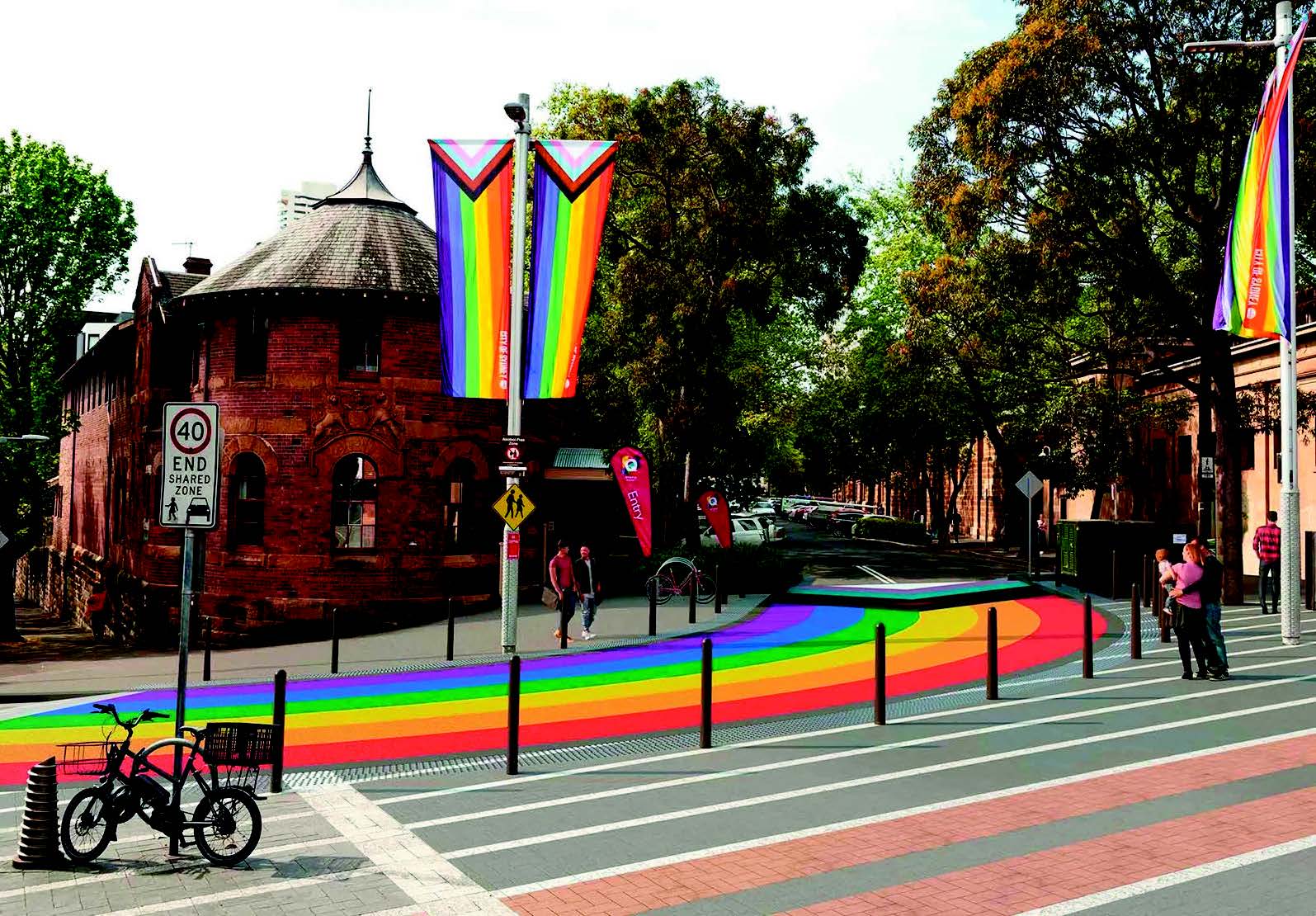
Figure 1: The Progress Pride flag in Darlinghurst, in celebration of the LGBTIQA+ communities and the Oxford Street cultural heritage (Source: City of Sydney, 2025)
From the various reforms and initiatives that you've implemented, what do you consider to be the most significant achievement, and how do you believe this has shaped the city's trajectory? Whilst housing has remained one of Sydney’s most pressing issues, there is still considerable room for progress in addressing the needs of vulnerable groups, such as single mothers, transgender women, and domestic violence survivors, whose challenges are further complicated by factors like age, health, ability, or cultural diversity. Could you elaborate on your key achievements in this area and outline your future plans to tackle these complexities?
We are in a housing affordability crisis, which is making owning or renting in Sydney incredibly difficult or out of reach for many. The problem is particularly acute in the inner city. Affordable housing is essential for a diverse, cohesive, and economically successful global city, and more importantly, is a basic human right. We are one of the few councils meeting the State Government’s housing targets, and we have a suite of effective policies delivering more Affordable Housing than any other council in Australia. We are committed to providing new housing in a bid to tackle the housing crisis, and have been delivering one-third of the entire housing target set by the NSW Government for the nine councils across eastern Sydney. We met 61% of that target within just seven years, with over 30,000 dwellings built or in the pipeline, and we now stand ready to deliver on the Government’s new housing targets through responsible planning and infrastructure delivery. Every night in the City, hundreds of people sleep on streets, in parks or other public places. We have an accelerating housing affordability crisis in NSW with more than 57,000 households on the social housing waiting list including more than 1,000 in the inner city, and a severe shortage of affordable homes for essential workers like nurses, teachers and police officers. The City invests more than $2.2 million each year to reduce homelessness, and even though housing and homelessness are primarily the responsibility of the State Government, every day our public space liaison officers walk the streets linking people sleeping rough in Sydney with the services they need. While housing is the responsibility of the NSW Government, the City of Sydney uses all levers at its disposal to deliver more rent capped Affordable Housing managed by Community Housing Provider (CHPs).
We do this through our planning controls by requiring private developers make a contribution for affordable housing, then distribute that funding to community housing providers, selling land at a discount and providing small scale one off grants to boost the delivery of diverse and affordable housing. As a result the City has contributed to 1,447 built affordable and diverse housing dwellings, with another 1,941 already in the pipeline. A further 1,950 affordable housing dwellings are projected to be supported by developer contributions which could see the number of affordable and diverse housing dwellings reach 5,338 by 2036. As at the end of June 2024 we have collected more than $400 million in levies, provided $31.6 million in discounted land and committed more than $13 million in grants. This increases rent capped Affordable Housing in perpetuity and protects it from sell-offs by future councils. Our priority for many years has been to maximise the amount of affordable and low-cost housing in our area. The best way to do that is by working with Community Housing Providers, which are overseen by a national regulated scheme and must provide housing in perpetuity. They can develop housing for less because they can access grants, cheap loans and tax concessions not available to Councils, and they are not bound by procurement and financial restrictions like we are. Supporting their efforts provides a far greater number of homes than we could deliver alone. Some of this housing is even more targeted, for instance, we recently provided properties for Sydney’s first dedicated affordable housing project for transgender women, which will be built in the inner-city suburb of Darlinghurst. We sold seven properties at a significant discount to Common Equity New South Wales which will partner with All Nations Housing Co-operative to create properties for women within the “highly at-risk” group. Trans women are some of the most vulnerable people in our society, and often face rejection and isolation from their families of origin and the broader community. Despite the progress we’ve made as a society when it comes to celebrating the contributions and achievements of LGBTIQA+ people, too many trans people regularly experience discrimination and exclusion. Providing safe and affordable housing for trans women is essential for their wellbeing. We want all people to feel confident in themselves. We also advocate to governments to provide more affordable and social housing, and at the very least, to stop selling off what is already there.
I am also currently advocating for Waterloo South Estate, which the State Government is in the process of redeveloping. More broadly, climate change is the greatest challenge of our times. With the Secretary-General of the United Nations Antonio Guterres announcing an ‘era of global boiling’, we all need to act. Climate action is the City’s highest priority, and as about 75 per cent of emissions are generated by cities, our actions are critical. We continue to lead many other governments with ambitious targets and policies, advocacy, and international partnerships. I think in the context of a city, all residents are affected by climate change, and our youngest and oldest residents are most vulnerable. Sydney is expected to have an increase in average temperature up to of 3.1 degrees by 2070. Heat is the most acute climate risk we face in Sydney. Bushfires and floods capture the media coverage, but extreme heat kills more people than any other natural disaster in Australia. In the Black Saturday Melbourne bushfires of 2009, 173 people died from the fires but there were 374 deaths from extreme heat – many of them elderly, vulnerable residents. Over the past decade 9,119 Australians were hospitalised for injuries from extreme weather and 677 people died from these injuries. By 2070, extreme heatwaves are projected to increase from a 1 in 100 event to a 1 in 2 event. Rising average temperatures will push summer-like conditions into much of the year. Air pollution is also expected to worsen which will affect people with respiratory issues – especially our old and our very young – causing productivity and health issues. Other risks include heavy rain events and flooding, and in the longer-term, rising sea levels and storm surges. I declared a climate emergency in June 2019, stating that climate change poses a serious risk to the people of Sydney. Our declaration followed a decade in which we took strong and effective action in response to climate change, action which continues today and into the future. The City has successful long-term partnerships with building owners and tenants resulting in massive reductions in emissions:
• Our Better Buildings Partnership involving 55% of major commercial buildings across the city has achieved a 95% reduction in emissions.
• CitySwitch is our partnership with office tenants that makes up 13% of office space in the city, and 66% have switched to renewable energy.
• Our Sustainable Destinations Partnership, with Sydney’s well-known cultural and entertainment venues like the Sydney Opera House and more than 53% of hotel rooms including the Hilton Hotel, has collectively reduced carbon emissions by 24%.
• And our Smart Green Apartments program has delivered more than $9 million in savings to Owners Corporations who are investing in efficiency improvements and renewables.
Street lighting is also one of the largest source of electricity use for Councils. 40% of our electricity is for street lighting which has contributed to 9% of our carbon emissions.
In 2023, we were the first council in Australia to complete the conversion of our 6,000 streetlights to energy efficient LEDs and we paid Ausgrid to convert their lights as well. This is the largest single carbon reduction project in the City’s history and saves the City and Ausgrid $2 million a year.
We’re aiming for net zero emissions in our City by 2035. On the road to achieving this, as a consent authority, we have mandated net zero building standards for new developments by 2026, and our bid to ban gas appliances in new developments, is with the State Government for approval. We’re electrifying our own operations and installing more EV chargers. Transport is the second highest and fastest growing source of CO2, pre-COVID generating 20% of emissions. The City’s commitment to light rail, cycleways and creating a city for walking reduces emissions, provides clean and efficient alternatives to driving, and improves productivity, the economy, and peoples’ health.
The City initiated safe separated cycleways, which is a net zero transport choice, despite vociferous opposition, we have delivered 25 kilometres of safe, separated cycleways, so now 10,000 people safely ride to work in the city centre daily, the equivalent of 10 full trains or 166 full buses.
Of all our City projects, building separated cycleways has been one of the hardest, but perhaps the most beneficial to women. In 2004, there were no separated cycleways in Sydney. The Bourke Street cycleway – linking Woolloomooloo, Surry Hills, Redfern and Waterloo – was one of the first that I opened, and the reaction from some media and the State Government was vicious. You would have thought I was opening a nuclear reactor. But residents and local businesses loved it. The Bourke Street Bakery handed out thousands of the City’s cycling guides and maps, and new businesses opened along its route including a bicycle café and two bicycle shops. And at the following election, my primary vote increased at the Bourke Street booth. I didn’t go through all that just for men in lycra. We build cycleways to help people who would like to ride but don't feel safe mixing it with fast moving traffic. That is especially true of women and children. Now to my delight there are long lines of children and parents riding to Bourke Street Public School.
A giant of urbanism, who I’ve met and been inspired by, the former Mayor of Bogota, Enrique Penalosa said: ‘A developed country is not a place where the poor have cars. It’s where the rich use public transport.’ He said a separated bicycle way is a symbol of democracy. ‘It shows that a citizen on a $30 bicycle is equally as important as one in a $30,000 car.’ Penalosa’s work underscored the principle that footpaths and cycleways are basic human rights, that streets are for people and that bike paths reinforce equity. To date we have installed 25 kilometres of safe, separated cycleways, 60 kilometres of shared paths and 40 kilometres of other cycling infrastructure. And bike trips in the City area have more than doubled since 2010 when independent counts began.
To facilitate the desired outcomes in practice and policymaking, what lessons can be drawn from other countries, such as the continuation of mainstreaming efforts in Vienna or the increased representation of female urbanists, such as Jane Jacobs? Looking forward, what legacy do you hope to leave behind, and what advice would you give to others seeking to follow in your footsteps?
We are constantly taking inspiration and learning from other cities. Long before my political career began I was standing on a street in Malaga, Spain, one Sunday morning when I was struck by a feeling that would stay with me forever. Newly married and travelling in Europe for the first time, the Cathedral bells were ringing and all the families were out in cafes and I turned around to Peter and said: “I feel like I have come home”. I have been trying to change Sydney ever since.
The European city ideal of parks, public spaces, and cafes for people to meet, eat, laugh and live and has stayed with me as I have worked to slowly transform Sydney from a car-clogged metropolis where people work and then go home to their families in the suburbs. I really like the urban environment, and I like the fact that what density does is it brings people onto the street. You get that community life. I have just found suburbia in many cases ugly and quite lonely. I think it is a much better quality of life than driving home to suburbia and parking in the garage and coming up to watch the television.
We have also taken great inspiration from world renowned urbanists. In 2004, the snap City of Sydney council election brought by the State Government in 2004 after it sacked and amalgamated South Sydney and Sydney councils, our Independent Community team won on a platform of light rail, a city of villages, and a long-term vision for Sydney. Back then Sydney was at breaking point, unable to cope with traffic volumes and gradually being choked in fumes and noise. It had a history of ad hoc interventions rather than considered long-term planning. I wanted to transform the city and its surrounds with a vision and a plan for achieving it. We commissioned Jan Gehl to complete a study, Public Spaces and Public Life Sydney, which produced evidence and data showing how people were using our city, its shortfalls and the ways it could be transformed. The advice concluded that George Street should become a 2.5 kilometre pedestrian boulevard with light rail as its centrepiece and no cars. It was timely and, following our largest consultation in the history of the City involving close to 180,000 individuals and businesses, Jan’s suggestions greatly contributed to the development of Sydney’s first long-term strategic vision since the 70s, Sustainable Sydney 2030.
This was the strategy that allowed us to realise Sydney’s potential as a green, global and connected city; and a city for people. It’s not the only Danish influence, indeed seeing people sit out on the streets for dinner on a chilly day in Denmark inspired me to press on with Sydney’s own outdoor dining revolution. I thought, we have far better weather, so if they can do it so can we – and we’ve since supported hundreds of businesses to trade on footpaths and roadways as part of our alfresco dining program.
I’ve always been guided by two quotes. Firstly from Buddha: “Your work is to discover your work and then with all your heart to give yourself to it.” And secondly from Theodore Roosevelt: “One of the greatest prizes in life is to work hard at worthwhile work.” Life’s about opportunity. It’s been wonderful to be able to work for the city, and to see the results. There’s always so much to do though, that’s just the nature of it.
And when someone tells me, it will never happen, I think, that’s what they said about the light rail and the separated bike lanes!