PIA analysis of recent poll
Each year, the Lowy Institute Poll provides a snapshot of Australian attitudes towards a wide range of social, economic and environmental issues. This year's results show a community navigating immediate financial pressures and weighing difficult trade-offs.
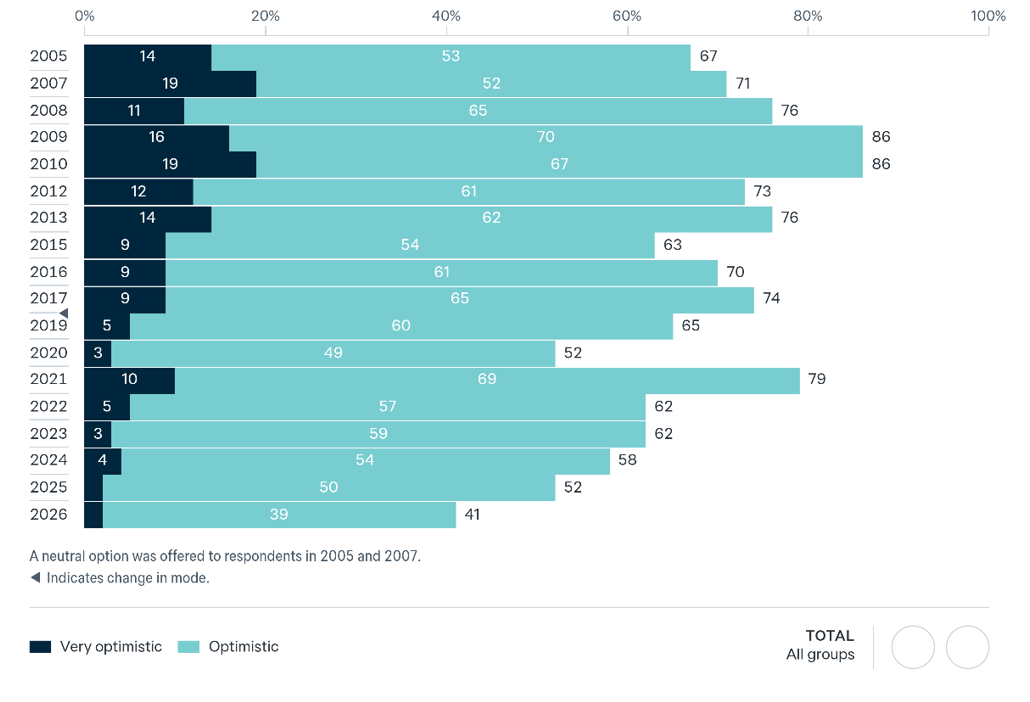
Only 41% of Australians are optimistic about the country's economic performance over the next five years, significantly down from 62% in 2022, and well below the levels recorded through much of the past 20 years.
55% believe migration levels are too high, representing a notable increase over recent years.
Nearly two-thirds of Australians believe the risks of artificial intelligence outweigh the benefits.
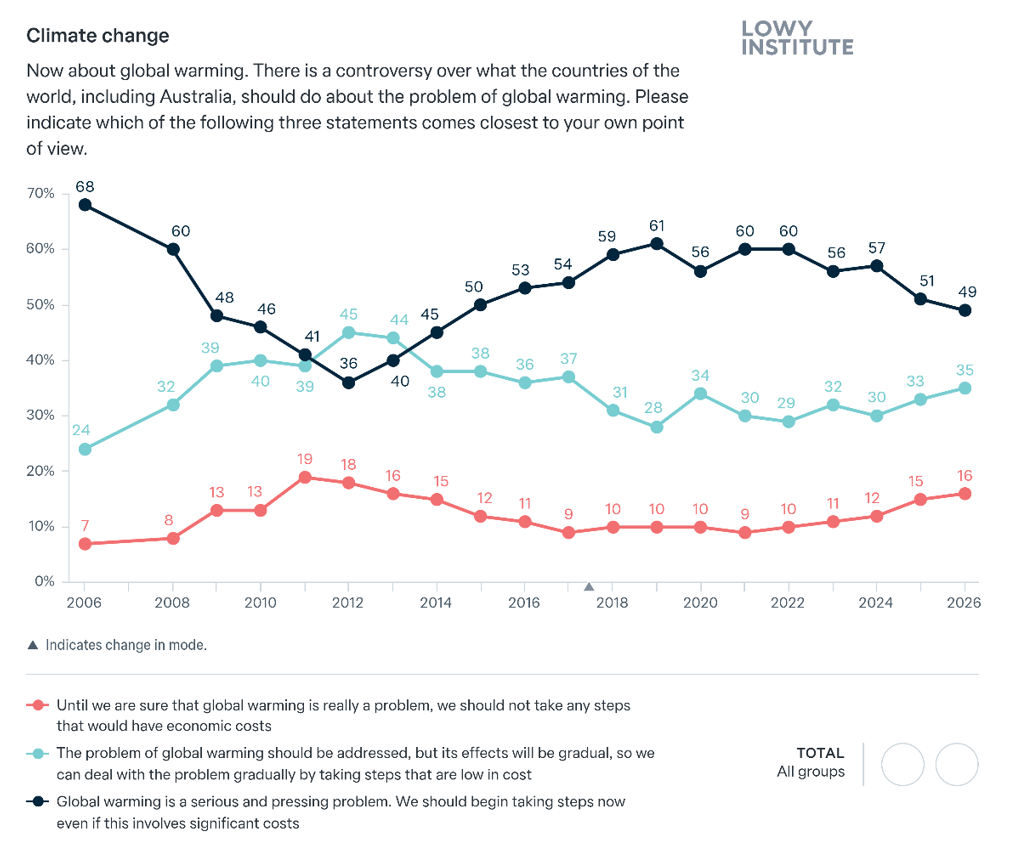
At the same time, 49% of Australians describe global warming as a serious and pressing problem requiring strong action, while Australians are evenly divided on whether achieving net zero emissions will leave the economy better or worse off.
Viewed together, these findings suggest a community increasingly focused on immediate pressures and near-term outcomes, while becoming less certain about how to navigate longer-term challenges such as population growth, climate change and technological disruption.
For planners, these findings are particularly pertinent as they touch on many of the issues affecting the communities we plan for across Australia.
Housing affordability, population growth, infrastructure delivery, climate resilience, economic productivity and technological change are all issues that sit within, or alongside, the planning system.
This poll also reflects a broader reality that many planners are encountering through their work. Cost-of-living pressures and housing affordability have become dominant concerns for many Australians.
When communities are focused on securing housing, managing household budgets and navigating economic uncertainty, those priorities inevitably influence how other issues are viewed. This is evident in planning policy debates across the country.
Communities continue to value liveable neighbourhoods, high-quality public spaces, sustainability, resilience and good design. Yet in the midst of a housing crisis, discussions are increasingly centred on meeting today’s housing needs.
Australians continue to support action on climate change, but many are also weighing up the economic impacts of that transition. Concerns about migration are frequently linked to housing availability, infrastructure capacity and access to services. Questions about artificial intelligence are often tied to accountability, trust and confidence in decision-making.
For most Australians, these are not separate issues. Housing affordability, population growth, infrastructure, climate resilience and economic opportunity are experienced together in the places where people live, work and raise their families.
This is where the value of planning becomes clear.
Planning is one of the few disciplines tasked with bringing these competing priorities together. It provides a framework for balancing immediate needs with long-term outcomes, private interests with public benefit, and growth with the infrastructure and services communities need to support it.
That responsibility becomes even more important during periods of economic pressure, when public debate is naturally drawn towards short-term challenges and immediate outcomes.
Planning is fundamentally a democratic process. It relies on evidence, expertise and long-term thinking, but it also relies on trust. Communities need confidence that growth is being managed, that infrastructure will follow development, that housing is being delivered in the right locations, and that decisions are being made in the public interest.
Australia's housing crisis will not be solved without good planning. Nor will climate adaptation, disaster resilience, renewable energy development, infrastructure coordination or the creation of productive and prosperous communities.
The challenge for planners is not choosing between these priorities. It is finding ways to advance them together.
The Lowy Poll offers an important reminder that community expectations are not fixed. They shift in response to economic conditions, housing pressures, technological change and lived experience.
Understanding those shifts is an essential part of good planning.
As Australia grapples with housing shortages, affordability pressures, climate impacts and population growth, the role of planning extends beyond managing land use. It is about helping communities navigate change, make informed choices about their future and build confidence in the path ahead.